


*This post summarizes the paper titled ‘Augmented Reality’s Impact on Student Creativity in Design and Technology: An Immersive Learning Study’. Click here to read: DOI
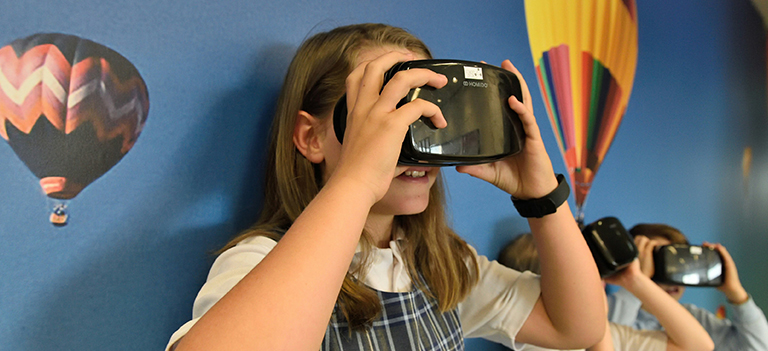
It started like any other classroom.
A group of students sat with their notebooks, trying to sketch ideas for a machine they had never seen in real life. Some stared at the paper. Others drew something simple and stopped. A few looked around, unsure of what to do next.
This is a common scene in Design and Technology classes. Students are asked to be creative, but often, they are left to imagine everything on their own. For many, that is the hardest part.
Now imagine a different classroom.
A student holds up a phone. On the screen, a machine appears right on the table in front of her. She turns it, zooms in, and looks at how each part works. Her partner leans in. They start talking.
“What if we change this part?”
“Can we make it faster?”
“Wait, let’s try another idea.”
In this classroom, ideas are no longer stuck in the mind. They are visible, movable, and shared.
This is what happened when augmented reality was introduced into a group of students learning Design and Technology.
Over four weeks, one group of students learned using this new tool, while another group continued with the usual method using textbooks and drawings. Both groups were given the same task: improve the design of a washing machine.
At first, there was not much difference. In fact, some students in the traditional group even started stronger. But as the weeks passed, something began to change.
The students using augmented reality became more active. They talked more. They tested more ideas. They were not afraid to try something different, because they could quickly adjust and see the result.
By the end of the study, their work told the story.
They did not just come up with more ideas. They explored different types of ideas. More importantly, they developed their designs in greater detail. Their sketches were richer, their explanations clearer, and their thinking more refined.
What made the difference was not just the technology itself.
It was what the technology allowed them to do.
They could see what they were thinking. They could build on each other’s ideas. They could experiment without worrying about making mistakes. Learning became something they did together, not alone.
Still, this does not mean technology can replace good teaching.
Without guidance, even the best tools can fall flat. The real value of augmented reality comes when it is used to support discussion, exploration, and collaboration.
There are also limits to what this study can say. It was done in one school, over a short period of time. Different students, different settings, or longer use might lead to different results.
But one thing is clear.
When students can see their ideas come alive, they begin to think differently.
And sometimes, that is where creativity begins.