


*This post summarizes the paper titled ‘STEM with a Conscience: Exploring the Development of STEM Skills and Social Values among Malaysian Students’. Click here to read: DOI
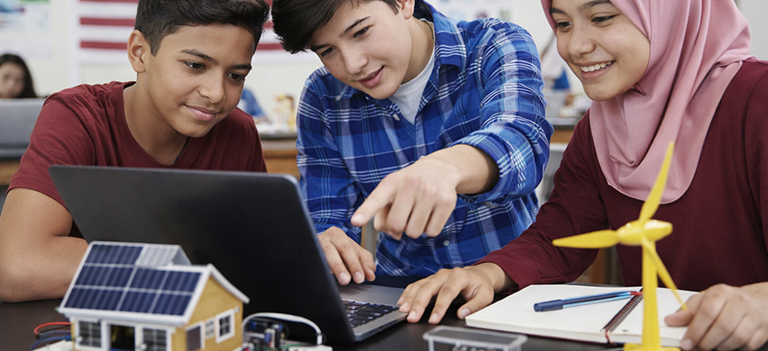
Imagine a classroom.
Not one where students are quietly copying notes.
Not one where the goal is just to pass an exam.
But a classroom where a simple question is asked:
“What problem do you want to solve for your country?”
And suddenly, everything changes.
It Starts With a Feeling
At first, the answers are simple.
“I want to stop bullying.”
“I want to help poor people.”
“I want to make life easier for others.”
These answers come from the heart.
They are full of care, but not yet clear on how.
Students feel the problem.
But they do not yet know how to solve it.
Then Something Shifts
After going through a STEM based learning program, something interesting happens.
The same students begin to think differently.
Not just with emotion
but with ideas.
Not just with care
but with action.
Instead of saying “I want to help flood victims,”
they begin to say:
“I want to design houses that can survive floods.”
Instead of “reduce cost of living,”
they say:
“I want to create systems that lower electricity use.”
Instead of “stop bullying,”
they say:
“I want to build an app to spread awareness and support victims.”
From Feeling to Solving
This is the real transformation.
Students move from simply caring
to actually creating solutions.
They begin to connect knowledge with real life.
Science is no longer just theory.
Technology is no longer just tools.
Both become ways to make life better.
Learning Becomes More Than Just Knowledge
What makes this powerful is not just the skills they learn.
It is the values they develop.
Students begin to think about:
- fairness
- responsibility
- the environment
- their role in society
They start to see themselves not just as learners
but as people who can contribute.
People who can build.
People who can change things.
A Different Kind of Education
This approach is often called learning with purpose.
Instead of separating subjects,
students work on real problems.
They build, test, and improve ideas.
They learn by doing.
And in that process, they develop more than knowledge
they develop character.
Why This Matters Today
The world today is more complex than ever.
Floods. Rising costs. Social issues.
These are not problems that can be solved by memorizing facts.
They need people who can think
connect ideas
and care about others.
And that is exactly what this kind of learning builds.
A New Way to See Students
This study shows something important.
Students are not just future workers.
They are future problem solvers.
Future leaders.
Future changemakers.
But only if we teach them the right way.
Final Thought
Maybe education should not only ask:
“What do you know?”
Maybe it should also ask:
“What will you do with what you know?”
Because in the end
knowledge alone is not enough.
What truly matters
is how we use it
for others.