Category: My Research

  • The Classroom Has Changed, So Has the Teacher

    The Classroom Has Changed, So Has the Teacher

    *This post summarizes the paper titled Innovative Teaching in the Digital Age: Exploring the Role of Teachers through Pre-Service Teachers’ Lenses.Click here to read: DOI

    There was a time when teaching was simple.

    A teacher walked into class, wrote on the board, explained, and students listened. That was enough.

    But today, everything has changed.

    Classrooms are no longer just rooms. They are screens, apps, videos, and digital spaces. Learning is no longer about just listening. It is about exploring, clicking, creating, and questioning. And in the middle of all this change, one question quietly appears.

    What is a teacher now?

    This study tried to answer that question. It listened to future teachers, those still in training, those who will soon step into real classrooms. What they said is simple, but powerful.

    They no longer see teachers as just people who deliver content.

    They see teachers as creators.

    Many of them said a teacher should design learning, not just present slides. A good lesson is not about showing information, but about building an experience. Something students can connect with, something that fits their level, their style, their pace.

    So teaching becomes something more alive. A teacher is like an architect, building learning step by step.

    But designing alone is not enough.

    The second thing they spoke about is skill. Not just any skill, but digital skill. In today’s world, knowing how to use technology is no longer optional. It is basic. Teachers must be confident using tools, platforms, and new systems. They must keep learning, because technology never stops moving.

    Yet here is the reality.

    Not every teacher has enough time. Not every school has strong internet. Not everyone gets proper training. So even if teachers want to innovate, sometimes the system holds them back.

    And that leads to the third idea.

    No teacher can do this alone.

    The future teachers spoke about sharing. Talking. Learning from each other. When teachers exchange ideas, things move faster. When they work together, they feel more confident to try new things.

    Innovation, in the end, is not an individual act. It is a shared journey.

    When you put all three together, a clearer picture appears.

    A modern teacher is someone who designs learning, understands technology, and works with others.

    Not separate roles, but one connected identity.

    And when these three meet, something powerful happens. Teaching becomes more creative, more meaningful, and more human.

    But there is one important truth behind all this.

    Technology itself is not the goal.

    It is just a tool.

    What matters is how teachers use it. Whether they use it to make learning more engaging, more thoughtful, and more relevant.

    That is where real teaching still lives.

    In the decisions teachers make every day.

    In the way they shape experiences for their students.

    In the way they continue learning, even as they teach.

    Because in the end, the role of a teacher has not disappeared.

    It has simply evolved.

    And the future teachers already understand this.

    They are not waiting to be told what to do.

    They are ready to build something new.

  • When Students Learn to Care Not Just Solve

    When Students Learn to Care Not Just Solve

    *This post summarizes the paper titled STEM with a Conscience: Exploring the Development of STEM Skills and Social Values among Malaysian StudentsClick here to read: DOI

    Imagine a classroom.

    Not one where students are quietly copying notes.
    Not one where the goal is just to pass an exam.

    But a classroom where a simple question is asked:

    “What problem do you want to solve for your country?”

    And suddenly, everything changes.

    It Starts With a Feeling

    At first, the answers are simple.

    “I want to stop bullying.”
    “I want to help poor people.”
    “I want to make life easier for others.”

    These answers come from the heart.
    They are full of care, but not yet clear on how.

    Students feel the problem.
    But they do not yet know how to solve it.

    Then Something Shifts

    After going through a STEM based learning program, something interesting happens.

    The same students begin to think differently.

    Not just with emotion
    but with ideas.

    Not just with care
    but with action.

    Instead of saying “I want to help flood victims,”
    they begin to say:

    “I want to design houses that can survive floods.”

    Instead of “reduce cost of living,”
    they say:

    “I want to create systems that lower electricity use.”

    Instead of “stop bullying,”
    they say:

    “I want to build an app to spread awareness and support victims.”

    From Feeling to Solving

    This is the real transformation.

    Students move from simply caring
    to actually creating solutions.

    They begin to connect knowledge with real life.

    Science is no longer just theory.
    Technology is no longer just tools.

    Both become ways to make life better.

    Learning Becomes More Than Just Knowledge

    What makes this powerful is not just the skills they learn.

    It is the values they develop.

    Students begin to think about:

    • fairness
    • responsibility
    • the environment
    • their role in society

    They start to see themselves not just as learners
    but as people who can contribute.

    People who can build.
    People who can change things.

    A Different Kind of Education

    This approach is often called learning with purpose.

    Instead of separating subjects,
    students work on real problems.

    They build, test, and improve ideas.

    They learn by doing.

    And in that process, they develop more than knowledge
    they develop character.

    Why This Matters Today

    The world today is more complex than ever.

    Floods. Rising costs. Social issues.
    These are not problems that can be solved by memorizing facts.

    They need people who can think
    connect ideas
    and care about others.

    And that is exactly what this kind of learning builds.

    A New Way to See Students

    This study shows something important.

    Students are not just future workers.

    They are future problem solvers.
    Future leaders.
    Future changemakers.

    But only if we teach them the right way.

    Final Thought

    Maybe education should not only ask:

    “What do you know?”

    Maybe it should also ask:

    “What will you do with what you know?”

    Because in the end
    knowledge alone is not enough.

    What truly matters
    is how we use it
    for others.

  • Why Schools Must Stop Teaching Subjects One by One

    Why Schools Must Stop Teaching Subjects One by One

    *This post summarizes the paper titled The Development Direction and Challenges of STEM Integration: A Systematic Literature ReviewClick here to read: DOI

    Think back to school.

    Math was one class.
    Science was another.
    Technology, if you had it, felt like something separate again.

    Everything was divided.

    You learned formulas in one room.
    Concepts in another.
    And somehow, you were expected to connect them on your own.

    But here is the truth.

    The real world does not work like that.

    The World Is Not Divided Like a Classroom

    In real life, problems do not come labeled as “math” or “science.”

    When engineers build a bridge, they use physics, mathematics, design, and technology all at once.
    When doctors treat patients, they combine biology, data, and human understanding.
    When we face global challenges, we do not solve them with one subject.

    We solve them by connecting everything.

    And yet, our education system still teaches students as if knowledge lives in separate boxes.

    A Quiet Shift Is Already Happening

    Across the world, educators are starting to rethink this.

    Instead of teaching subjects one by one, they are moving towards something called STEM.

    It sounds simple
    Science, Technology, Engineering, Mathematics.

    But the real idea is deeper than that.

    It is not about adding more subjects.
    It is about connecting them.

    Learning Through Real Problems

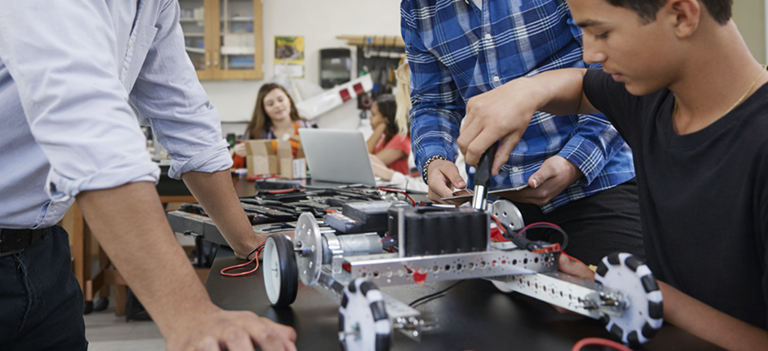
    Imagine a classroom where students are not just listening.

    Instead, they are building something.

    A robot.
    A small vehicle.
    A smart solution to a real problem.

    To do that, they must use math, science, and technology together.

    Not separately.

    This is what modern learning is starting to look like
    learning through projects, through questions, through real situations.

    From Teacher Talking to Students Doing

    There is another big change happening.

    In the past, learning was mostly about listening.

    The teacher speaks.
    Students take notes.
    Exams decide everything.

    But now, the focus is shifting.

    Students are expected to explore, build, test, and think.

    They learn by doing.

    They ask questions.
    They try.
    They fail.
    They try again.

    And in that process, they learn more deeply than before.

    But It Is Not As Easy As It Sounds

    This shift is powerful, but it is not simple.

    Teachers must now work across subjects.
    Schools must redesign their lessons.
    Students must adapt to a new way of learning.

    Even time and resources become challenges.

    In fact, one of the biggest difficulties is this
    how do you connect subjects smoothly without losing depth?

    How do you teach everything together
    without confusing students?

    These are real questions that educators are still trying to answer.

    Why This Change Matters

    Because the world has changed.

    Technology is moving fast.
    Jobs are changing.
    Problems are becoming more complex.

    Students today are not just preparing for exams.
    They are preparing for a future we cannot fully predict.

    And that future will not reward those who only know one thing.

    It will reward those who can connect ideas
    solve problems
    and think across boundaries.

    A Bigger Meaning Behind It All

    At its core, this is not just about education.

    It is about how we see knowledge.

    Do we see it as separate pieces
    or as something connected?

    Because once students start seeing connections
    they do not just memorize.

    They understand.

    Final Thought

    Maybe the question is no longer
    “What subject are you learning today?”

    Maybe the better question is
    “What problem are you solving today?”

    Because in the end
    learning is not about subjects.

    It is about making sense of the world.

    And the world has never been divided to begin with.

  • Why Big Images Make Learning Hard? Cause and Solution

    Why Big Images Make Learning Hard? Cause and Solution

    *This post summarizes the paper titled ‘Application of Singular Value Decomposition for Image Compression of Yogyakarta Cosmological Axis in Digital Learning in Vocational Education’. Click here to read: DOI

    Think about this.

    You open your phone to study something important.
    A picture loads… slowly. Then it freezes. Then it fails.

    You try again.

    Still the same.

    In a world where everything is digital, sometimes the biggest problem is something very simple
    files that are just too large.

    And this is not just a small issue. It affects how people learn.

    When Pictures Become a Problem

    In vocational learning, pictures are not just decoration.
    They are the lesson.

    Students need to see details. Shapes. Structures. Patterns.
    Without clear visuals, understanding becomes harder.

    But here is the challenge.

    High quality images are heavy.
    They take time to load. They use storage. They slow everything down.

    This becomes even more difficult when learning happens online, especially for students using basic devices or limited internet.

    So the real question becomes simple.

    How do we keep the image clear… but make it lighter?

    A Simple but Powerful Idea

    Researchers looked for a way to solve this.

    Not by removing the image.
    Not by reducing its importance.

    But by changing how the image is stored.

    They used a method called SVD.

    It sounds technical. But the idea is actually quite simple.

    Every image is made of information.
    But not all information is equally important.

    Some parts carry the main structure
    the shapes, the outlines, the meaning.

    Other parts are just small details
    tiny textures, minor noise.

    What if we keep only the most important parts…
    and let go of the rest?

    What Happens When You Keep Only What Matters

    When this method was applied, something interesting happened.

    Even after removing a lot of data,
    the image still looked almost the same.

    The main structure remained clear.
    The important details were still visible.

    This means the image became lighter
    but still useful for learning.

    In fact, the study showed that most of an image can be preserved using only a small portion of its original data.

    But There Is Always a Trade Off

    Of course, nothing comes for free.

    If you reduce too much, the image becomes blurry.
    Details disappear. The meaning starts to fade.

    If you keep more data, the image looks better
    but the file becomes heavier again.

    So the real task is not just compression.

    It is balance.

    Finding the point where the image is still clear enough
    but light enough to move easily.

    Why This Matters More Than We Think

    This is not just about images.

    This is about access.

    When files are lighter:

    • Students can learn faster
    • Materials can reach more people
    • Learning becomes more inclusive

    And when learning becomes easier to access,
    it becomes more powerful.

    Especially in vocational education, where seeing is understanding.

    A Bigger Picture

    There is also something deeper here.

    This method was applied to images of cultural heritage
    something meaningful, something worth preserving.

    And yet, even these detailed and rich images
    could be made lighter without losing their identity.

    It shows that technology does not have to erase meaning.

    It can protect it, while making it easier to share.

    Final Thought

    Sometimes, innovation is not about adding more.

    It is about removing what is not needed.

    Keeping what matters.
    Letting go of what does not.

    And in doing so, making something better
    simpler
    lighter
    and more accessible to everyone.

  • When Exercise Meets Virtual Worlds: Can Tai Chi in VR Change How We Age?

    When Exercise Meets Virtual Worlds: Can Tai Chi in VR Change How We Age?

    *This post summarizes the paper titled Immersive Tai Chi for Home-Based Exercise in Older Adults: Usability and Feasibility StudyClick here to read: DOI

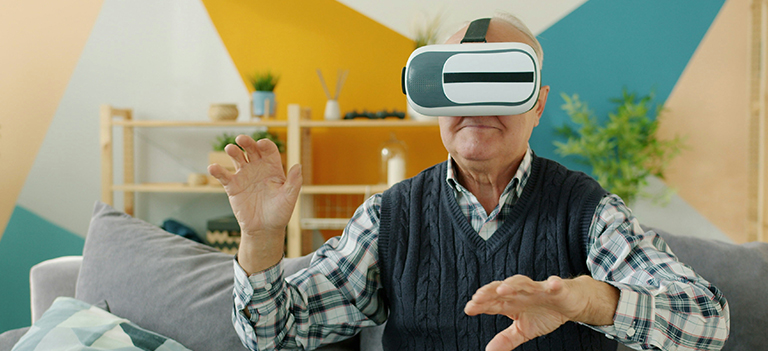
    Imagine this.

    You are in your living room. No gym. No instructor. No crowd.
    Just you… and a headset.

    Suddenly, the space around you transforms. A calm landscape appears. Gentle music plays. A figure shows you how to move. You follow, slowly, deliberately. Your hands rise, your body flows.

    You are doing Tai Chi.
    But not in a park. Not in a class.
    Inside a virtual world.

    This is no longer science fiction. It is already happening.

    A recent study explored whether older adults could actually use virtual reality to exercise at home. Not just for fun, but as a real tool to stay healthy, independent, and active as they age.

    The Problem We Rarely Talk About

    We know exercise is important, especially for older adults. It keeps the body strong, the mind sharp, and reduces the risk of falling.

    But here is the reality.

    Many older adults do not stick to exercise routines.

    Why?

    Because it is not always easy.
    There is fear of falling. Lack of motivation. Limited access to facilities. Sometimes, just the feeling that it is not enjoyable.

    Traditional exercise, for many, simply does not fit their daily lives anymore.

    A Different Kind of Exercise

    So researchers tried something different.

    They combined Tai Chi, a gentle and proven form of movement, with virtual reality and mixed reality technology.

    The idea was simple:
    What if exercise could feel like a game?

    Participants wore headsets and followed guided movements inside a virtual environment. The system tracked their hands and body, gave feedback, and turned each session into a kind of interactive experience.

    Short sessions. Just five minutes each.
    Simple movements. Repeated with guidance.
    All designed to be done at home.

    What Happened Next Was Interesting

    Most participants did not just accept the system.
    They actually enjoyed it.

    They reported feeling:

    • Happy
    • Engaged
    • Capable

    In fact, their sense of “competence” and enjoyment was surprisingly high, while feelings of stress or frustration were very low.

    Even more interesting, many said the activity did not feel difficult at all.

    That may sound like a small detail, but it matters.

    Because when something feels easy and enjoyable, people are far more likely to continue doing it.

    But Not Everyone Could Use It

    Here is where the story becomes more complex.

    Not everyone could adapt to virtual reality.

    About 1 in 5 participants dropped out early because they felt dizzy or uncomfortable.

    Even among those who continued, some still experienced mild symptoms like:

    • Dizziness
    • Eye strain
    • A slight sense of imbalance

    This is what researchers call “cybersickness.”

    So while the idea is promising, the technology is not yet perfect.

    A Curious Paradox

    There was another surprising finding.

    Participants felt confident.
    They believed they were doing well.

    But in reality, their movement accuracy was only moderate.

    This creates what researchers describe as a kind of paradox:

    People feel capable, even when their performance is not perfect.

    And strangely, that might not be a bad thing.

    Because that feeling of success encourages them to keep going.

    In the long run, consistency may matter more than perfection.

    What This Means for the Future

    This study is not just about technology.
    It is about how we rethink aging.

    For decades, we have treated exercise as something structured, formal, sometimes even intimidating.

    But what if it could be:

    • Personal
    • Flexible
    • Enjoyable
    • Done at home

    Virtual reality opens that possibility.

    It turns exercise into an experience, not a task.

    But there is still work to do.

    The technology must become more comfortable.
    More accessible.
    More intuitive.

    And most importantly, it must work not just for the active elderly, but for everyone.

    The Bigger Question

    This raises a deeper question.

    As technology becomes more embedded in our lives,
    will it replace traditional ways of staying healthy?

    Or will it simply become another tool, one that adapts to us instead of forcing us to adapt to it?

    Perhaps the answer lies somewhere in between.

    Final Thought

    In the end, this is not just a story about Tai Chi or virtual reality.

    It is about dignity.

    About giving people the ability to stay active, independent, and confident, even as they grow older.

    And if a headset and a virtual world can help achieve that,
    then maybe the future of aging is not something to fear.

    But something we can redesign.

  • When Students Can See Their Ideas Come Alive

    When Students Can See Their Ideas Come Alive

    *This post summarizes the paper titled Augmented Reality’s Impact on Student Creativity in Design and Technology: An Immersive Learning Study’. Click here to read: DOI

    It started like any other classroom.

    A group of students sat with their notebooks, trying to sketch ideas for a machine they had never seen in real life. Some stared at the paper. Others drew something simple and stopped. A few looked around, unsure of what to do next.

    This is a common scene in Design and Technology classes. Students are asked to be creative, but often, they are left to imagine everything on their own. For many, that is the hardest part.

    Now imagine a different classroom.

    A student holds up a phone. On the screen, a machine appears right on the table in front of her. She turns it, zooms in, and looks at how each part works. Her partner leans in. They start talking.

    “What if we change this part?”

    “Can we make it faster?”

    “Wait, let’s try another idea.”

    In this classroom, ideas are no longer stuck in the mind. They are visible, movable, and shared.

    This is what happened when augmented reality was introduced into a group of students learning Design and Technology.

    Over four weeks, one group of students learned using this new tool, while another group continued with the usual method using textbooks and drawings. Both groups were given the same task: improve the design of a washing machine.

    At first, there was not much difference. In fact, some students in the traditional group even started stronger. But as the weeks passed, something began to change.

    The students using augmented reality became more active. They talked more. They tested more ideas. They were not afraid to try something different, because they could quickly adjust and see the result.

    By the end of the study, their work told the story.

    They did not just come up with more ideas. They explored different types of ideas. More importantly, they developed their designs in greater detail. Their sketches were richer, their explanations clearer, and their thinking more refined.

    What made the difference was not just the technology itself.

    It was what the technology allowed them to do.

    They could see what they were thinking. They could build on each other’s ideas. They could experiment without worrying about making mistakes. Learning became something they did together, not alone.

    Still, this does not mean technology can replace good teaching.

    Without guidance, even the best tools can fall flat. The real value of augmented reality comes when it is used to support discussion, exploration, and collaboration.

    There are also limits to what this study can say. It was done in one school, over a short period of time. Different students, different settings, or longer use might lead to different results.

    But one thing is clear.

    When students can see their ideas come alive, they begin to think differently.

    And sometimes, that is where creativity begins.

  • Persuasive Design: Helping Seniors Eat Healthier with a Mobile App

    Persuasive Design: Helping Seniors Eat Healthier with a Mobile App

    *This post summarizes the paper titled Mobile Application on Healthy Diet for Elderly based on Persuasive Design. Click here to read: DOI

    Eating well is crucial to maintaining good health, especially as we age. However, many elderly people struggle to keep track of their meals or determine what is good for them. This study introduces Nutrihealth, a mobile app created to help elderly users manage their diets using persuasive design techniques.

    Nutrihealth is a mobile app that helps seniors

    • Calculate their Body Mass Index (BMI)
    • Track their daily calorie intake
    • Get food suggestions based on their needs

    But what makes Nutrihealth special is how it’s designed to encourage users to stay healthy, not just inform them. That’s where persuasive design comes in.

    Persuasive design is a way of designing technology that gently guides people to make better choices without forcing them. It uses strategies that motivate and influence behavior.

    Nutrihealth uses these techniques:

    • Reduction: simplifies tasks to make them easier to do
    • Tunneling: guides users step by step
    • Tailoring: gives personalized suggestions
    • Self-monitoring: shows users their progress
    • Attractiveness: uses a clean, senior-friendly interface
    • Trustworthiness: provides reliable and clear information
    • Readability & terminology: uses simple language and clear visuals

    These elements help seniors stay engaged, understand the app easily, and feel motivated to improve their diet. As people age, they may face challenges like memory issues, lower tech confidence, or reduced eyesight. Persuasive design helps by :

    • Making technology more approachable
    • Encouraging positive habits without feeling overwhelmed
    • Giving feedback that builds confidence and motivation

    In short, it turns an app into a gentle coach instead of just a tool. Nine seniors in Malaysia, aged 50 and above, used the app for three days. They logged their meals, got daily calorie updates, and received food suggestions. Afterward, they answered a survey and were interviewed.

    • Easy to use: Most said the app was simple and not confusing
    • Helpful info: It gave useful feedback about their health
    • Family support: Their families encouraged them to use it
    • Willing to continue: All were open to using it again in the future

    Some faced technical issues like older phones or limited food options in the app’s database, but the overall experience was positive.

    Nutrihealth shows that with thoughtful, persuasive design, mobile apps can truly support older adults in living healthier lives. The app didn’t just inform. It inspired users to take action. With more development, like a larger food database and wider testing, Nutrihealth could become a valuable tool for elderly care everywhere.

  • Evaluating a Learning Tool for Research Decision Support

    Evaluating a Learning Tool for Research Decision Support

    *This post summarizes the paper titled ‘The Evaluation of a Persuasive Learning Tool using Think-Aloud Protocol’. Click here to read: DOI

    In the ongoing shift toward digital learning environments, the challenge is no longer just delivering content but designing systems that actively support student learning and decision-making. A recent study conducted at Universiti Kebangsaan Malaysia examined the effectiveness of a persuasive learning tool, TemanKajianKu, which was developed to guide students, especially postgraduates, through the complexities of statistical and sampling analysis in research.

    Despite the proliferation of e-learning platforms, many still fall short in supporting critical aspects of the research process. One such challenge is helping students identify appropriate statistical methods for their studies. This is particularly significant in postgraduate education, where research topics are diverse and often require tailored methodological support.

    TemanKajianKu (translated as “My Study Buddy”) is a web-based system designed using the Persuasive Learning Objects and Technologies (PLOT) model. This model integrates persuasive design principles that aim to influence user behavior positively without coercion. The system assists users in selecting statistical or sampling analysis methods by employing features such as

    • Reduction: Simplifying tasks by breaking down processes.
    • Tunneling: Guiding users step-by-step through analysis procedures.
    • Tailoring: Offering personalized suggestions based on user input.
    • Self-Monitoring: Enabling users to track their progress.
    • Social Signals: Providing supportive, encouraging feedback through chatbot interactions.

    To evaluate the system’s effectiveness and user experience, the study employed the think-aloud protocol, a qualitative method where users verbalize their thoughts while interacting with a system. Ten postgraduate students from various academic backgrounds participated in the pilot evaluation.

    Participants were asked to complete a series of tasks using TemanKajianKu, including responding to three research scenarios and interacting with a chatbot designed to assist in selecting appropriate statistical methods.

    1. Ease of Use: Most participants found the system intuitive and straightforward, even on first use. The reduction and tunneling elements contributed to a seamless experience.
    2. Enhanced Decision-Making: The chatbot and diagrammatic tools helped users understand and select appropriate research methods. Users felt more confident navigating statistical choices, especially when guided by tailored suggestions.
    3. User Feedback: Participants highlighted the clarity of the language, the logical flow of information, and the supportive tone of the chatbot as particularly helpful. However, suggestions were made to improve visibility (e.g., enlarging diagrams, improving font size) and interactivity (e.g., zoom features).
    4. Persuasive Design in Practice: Each of the five persuasive design elements implemented was found to be effective in improving user engagement and supporting decision-making.

    This study demonstrates how persuasive design can play a crucial role in educational technology, especially in domains that require critical thinking and methodological precision. Rather than merely delivering content, systems like TemanKajianKu provide guidance, motivation, and support. These components are often underdeveloped in traditional e-learning tools.

    Furthermore, the integration of chatbots as conversational agents opens up possibilities for more natural and adaptive learning support. This aligns with broader trends in human-computer interaction, where system responsiveness and user emotion are increasingly central to design.

    The findings support the potential of TemanKajianKu as a prototype for persuasive learning systems. Future work will focus on enhancing the chatbot’s capabilities to better identify user research goals and provide more contextually accurate suggestions. Additionally, user interface improvements based on participant feedback will be implemented to ensure better accessibility and usability.

    TemanKajianKu exemplifies how educational tools can be made more effective through persuasive design. By supporting students in navigating complex research decisions, systems like this one can improve not only learning outcomes but also user confidence and engagement. As higher education continues to adopt and refine digital learning solutions, integrating persuasive design principles should be considered a key strategy in system development.

  • Designing Better Health Apps: Lessons from Real Users

    Designing Better Health Apps: Lessons from Real Users

    *This post summarizes the paper titled Factors Driving the Use of Mobile Health Apps: Insights from a Survey’. Click here to read: DOI

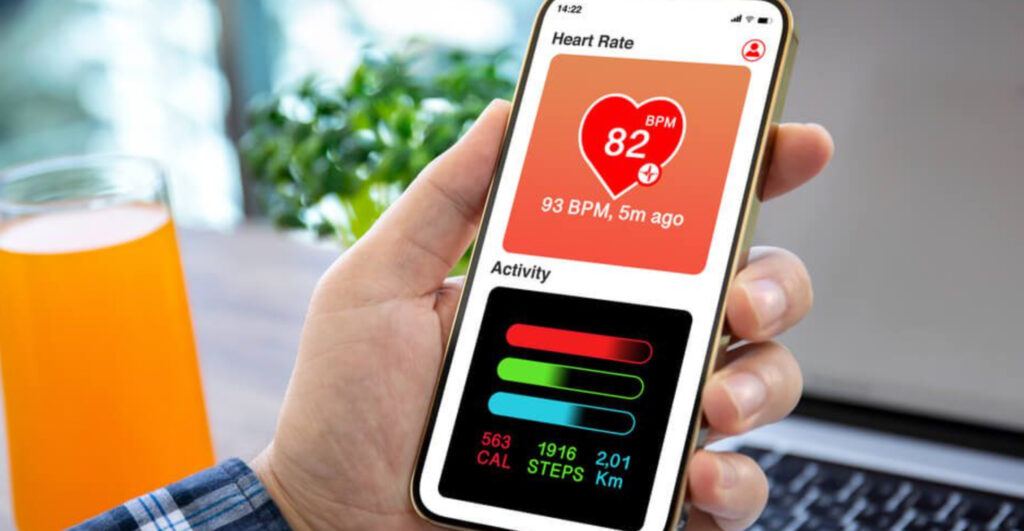
    The article examines why people keep using or stop using mobile health (mHealth) apps. These apps are designed to help users improve their health by tracking exercise, managing diet, or reducing stress. The study points out that while many people download these apps, a large number stop using them after a short time. The goal of the research was to understand what helps people stay engaged with these apps and what causes them to stop.

    The study used a survey of 122 adults who had used mHealth apps. It looked at different features of the apps to see how they affected users’ decisions to keep using them. One of the most important features was how well the app fit into daily life without being annoying—called “unobtrusiveness.” This feature had the strongest link to continued use. Other useful features were tools that helped users reach their goals, a good design, and trust in the app’s information. Features like reminders and notifications were not as helpful, and some users found them annoying.

    The study also asked open-ended questions to learn more about what motivated users. People said they kept using the apps because they were easy to use, helped them reach personal health goals, and had helpful features like syncing with watches or fitness devices. On the other hand, reasons for quitting included technical problems, having to pay for features, being too busy, losing motivation, or feeling like the app was no longer needed.

    In the end, the study found that making mHealth apps easy to use and helpful for personal goals is key to keeping users. It also showed that while design and features matter, apps must also be flexible and adapt to people’s changing needs. The study suggests that future mHealth apps should offer more personalized and motivating experiences to keep users interested and help them stick to healthy habit.

  • From Creativity to Collaboration: How Virtual Tools Enhance STEM Education

    From Creativity to Collaboration: How Virtual Tools Enhance STEM Education

    *This post summarizes the paper titled ‘The Impact of Virtual Collaboration Tools on 21st-Century Skills, Scientific Process Skills and Scientific Creativity in STEM. Click here to read: DOI

    Virtual collaboration tools have become increasingly significant in education, especially during and after the COVID-19 pandemic. They provide platforms for interaction, engagement, and collaborative learning, which are critical for building essential skills for the modern workforce. The study evaluated the ExxonMobil Young Engineers (EYE) program in Malaysia, which utilized Zoom to engage students in STEM-based learning activities.

    The program focused on three main areas:

    1. 21st-century skills, such as critical thinking, collaboration, and digital literacy.
    2. Scientific process skills, including problem-solving, hypothesis formation, and experimental design.
    3. Scientific creativity, which involves innovative thinking and applying knowledge to solve complex problems.

    The EYE program was structured in three phases: introductory briefings, breakout room activities led by professional engineers, and final reflections. Students also received STEM kits for hands-on tasks, ensuring active participation.

    Key Findings:

    1. Skill Development: The program significantly improved students’ competencies in all three areas. Post-test scores showed marked improvements compared to pre-test evaluations.
    2. Gender Dynamics: Female students demonstrated greater improvements in 21st-century skills, suggesting that virtual environments may particularly support inclusivity and engagement for this group.
    3. Regional Differences: While the program was effective overall, students from rural areas faced more challenges, likely due to disparities in access to technology and resources. Scientific process skills were notably affected by regional factors.
    4. Inclusivity: Virtual collaboration tools like Zoom proved equally effective across genders in enhancing scientific creativity and process skills, indicating their potential to bridge learning gaps.

    Implications:

    The study highlights the potential of virtual collaboration tools to provide equitable, high-quality education, particularly in STEM fields. However, regional differences underscore the need for tailored approaches to address infrastructure and resource limitations. Ensuring equal access to digital devices and stable internet is crucial for maximizing these tools’ benefits.

    Recommendations:

    1. Enhanced Support: Programs should address regional disparities by providing resources and training for educators and students in underserved areas.
    2. Further Research: Investigating gender-specific factors influencing engagement and success can help refine virtual learning strategies.
    3. Technology Integration: Incorporating advanced tools like augmented reality (AR) and virtual reality (VR) could further enhance creativity and engagement in STEM education.

    In conclusion, the EYE program demonstrates that virtual collaboration tools can effectively enhance vital skills for students, preparing them for future challenges. However, addressing disparities and exploring innovative technologies will ensure these tools’ potential is fully realized in diverse educational contexts.